How do you put on a concert people actually want to come to? How do you build a venue or a music project that lasts — in an industry that keeps changing?
This self-study course looks closely at how live music is programmed, communicated and developed in practice, through conversations with some of Sweden’s most experienced promoters and venues.
The venues you meet
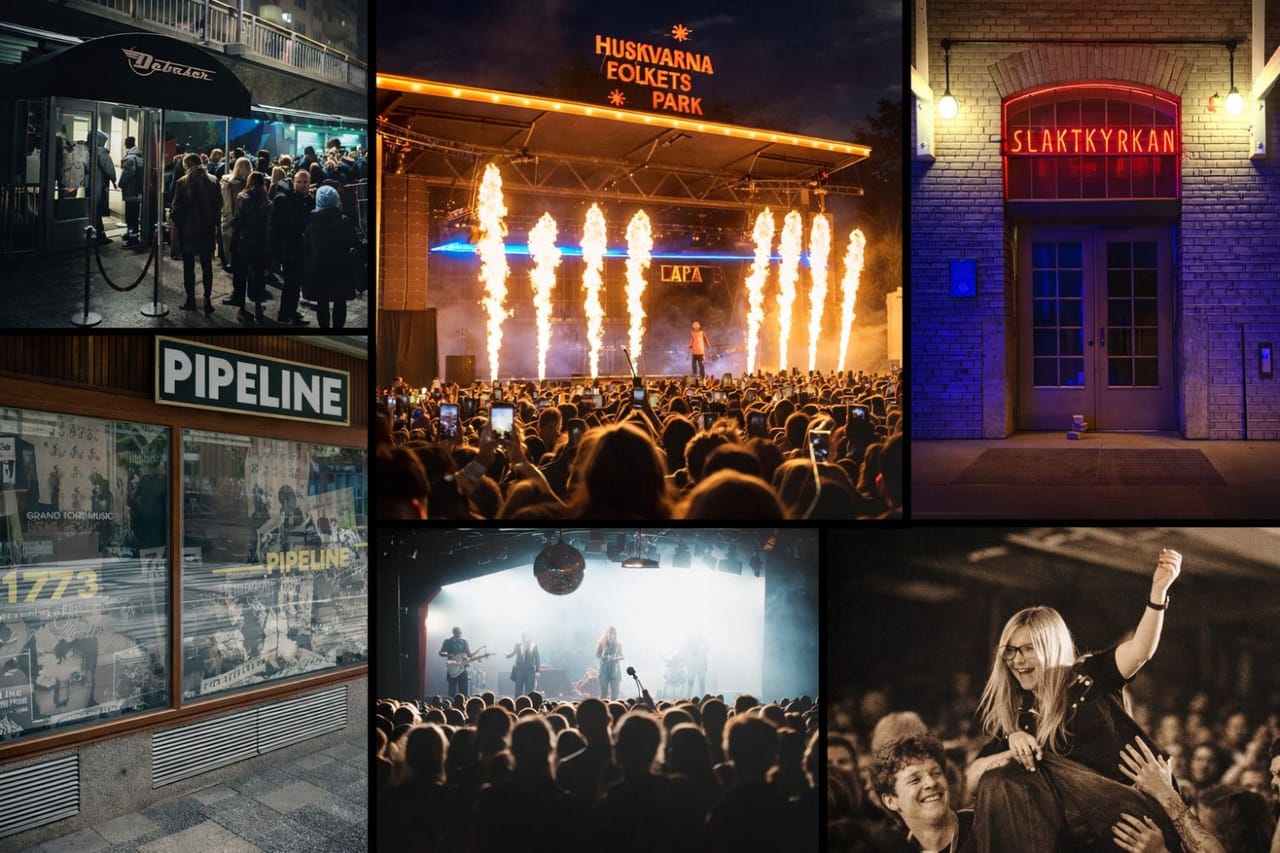
The course features Debaser, Pipeline, Huskvarna Folkets Park and Slaktkyrkan — organisations that have each built strong music operations with a clear identity and long-term durability. Through their accounts you follow how bookings come about, how audiences are built, and how promoters navigate between artistic ambition, economics and their relationship with an audience.
Among the things covered
- How booking and negotiation work in practice
- How networks and trust are built in the music industry
- How promoters work strategically with programming and audience
- How communication, tone and community create engagement
- How venues develop their identity and brand over time
- How to balance risk, economics and artistic ambition
Short films, reflection questions and quizzes help you relate the content to your own practice.
Who is it for?
Anyone working with or wanting to develop live music — as a promoter, musician or artist. It suits both established organisations and people who want a deeper understanding of how concerts are planned, communicated and delivered. Whether you run a venue, put on concerts or stand on the stage yourself, it offers new perspectives on how the meeting between artist, promoter and audience actually happens.
Contributors
Micke Lindevall co-founded Debaser and has spent more than 20 years as programme director, strategist and driving force behind the venue. He sits on the board of Svensk Live, chairs Stockholms Musikarrangörer and is active in European networks such as Liveurope.
Theresa Bystedt is managing director of Pipeline and has been involved there since the early 2000s, focused on sustainable structures where music and culture become tools for personal development and social cohesion. Thomas Björling is Pipeline’s programme manager, a musician and booker with long experience in the industry.
Ellen Stenberg develops the operation at Huskvarna Folkets Park, rooted in the folkpark tradition and involved in the Popadelica and Park Sounds festivals and the music association 1934. Her work includes marketing and communication.
Erik Melin is communications officer and booker at Slaktkyrkan, with a background in advocacy, art and concert promotion.
How self-study works
The course is entirely web-based. Once accepted you get an account in Kulturakademin’s learning platform Learnster, where all the material sits together — video, text, exercises and links. You work through it when, where and at the pace you like, and you can pause and come back. Finish it and you get a certificate automatically.
Practical details
- Format: self-study online, at your own pace
- Course period: 30 March – 31 December 2026
- Language: Swedish
- Kostnadsfritt if you are registered in Västra Götaland. Otherwise SEK 1,900, paid before the course starts.
- Rolling admission — apply by 31 December 2026
Produced by Kulturakademin with VG Live, supported by Västra Götalandsregionen.
How to apply
Applications go to Kulturakademin through the link on this page. Applicants who meet the admission criteria are accepted on a rolling basis. Questions about the course? Contact Erik Bergstrand at Kulturakademin, erik@kulturakademin.com.


